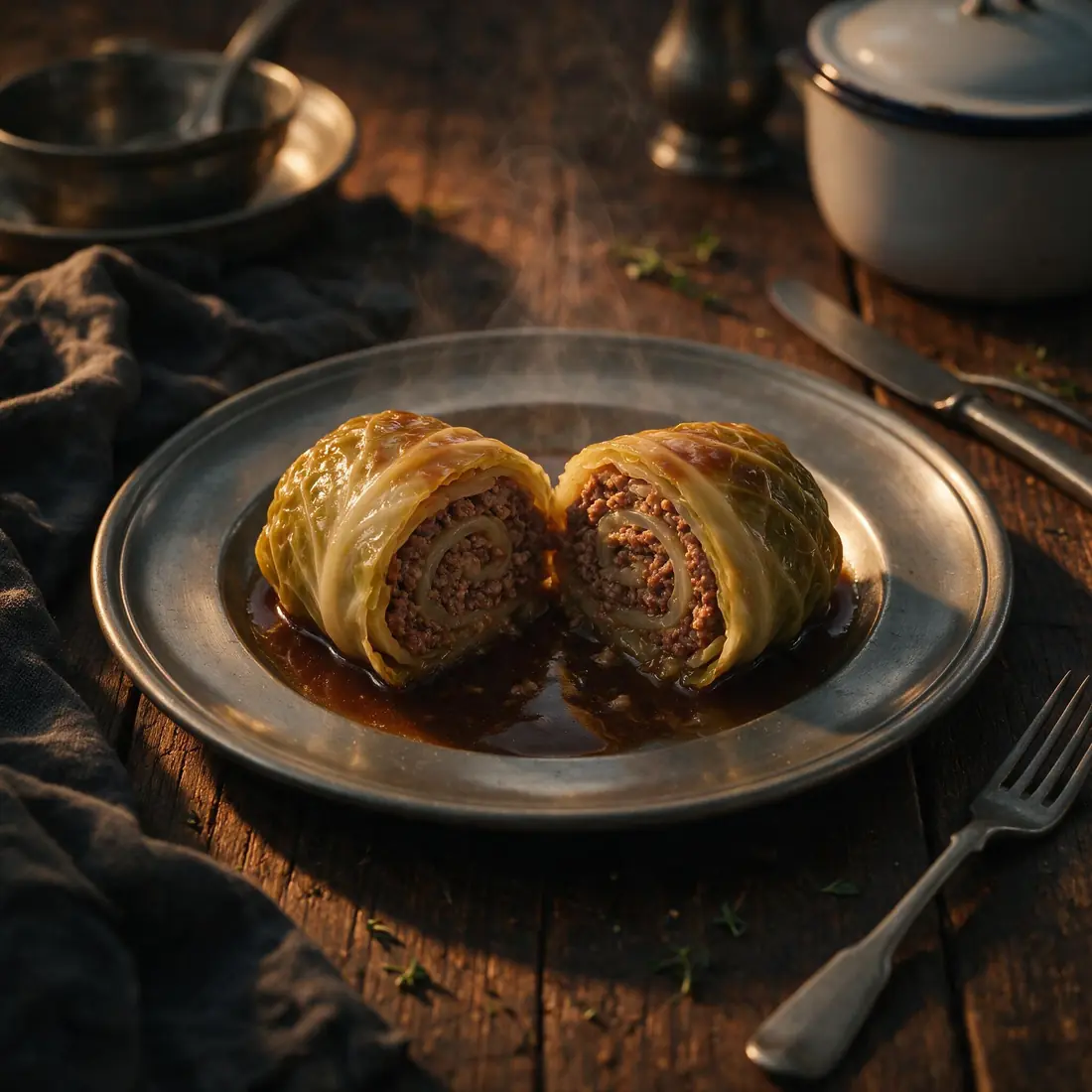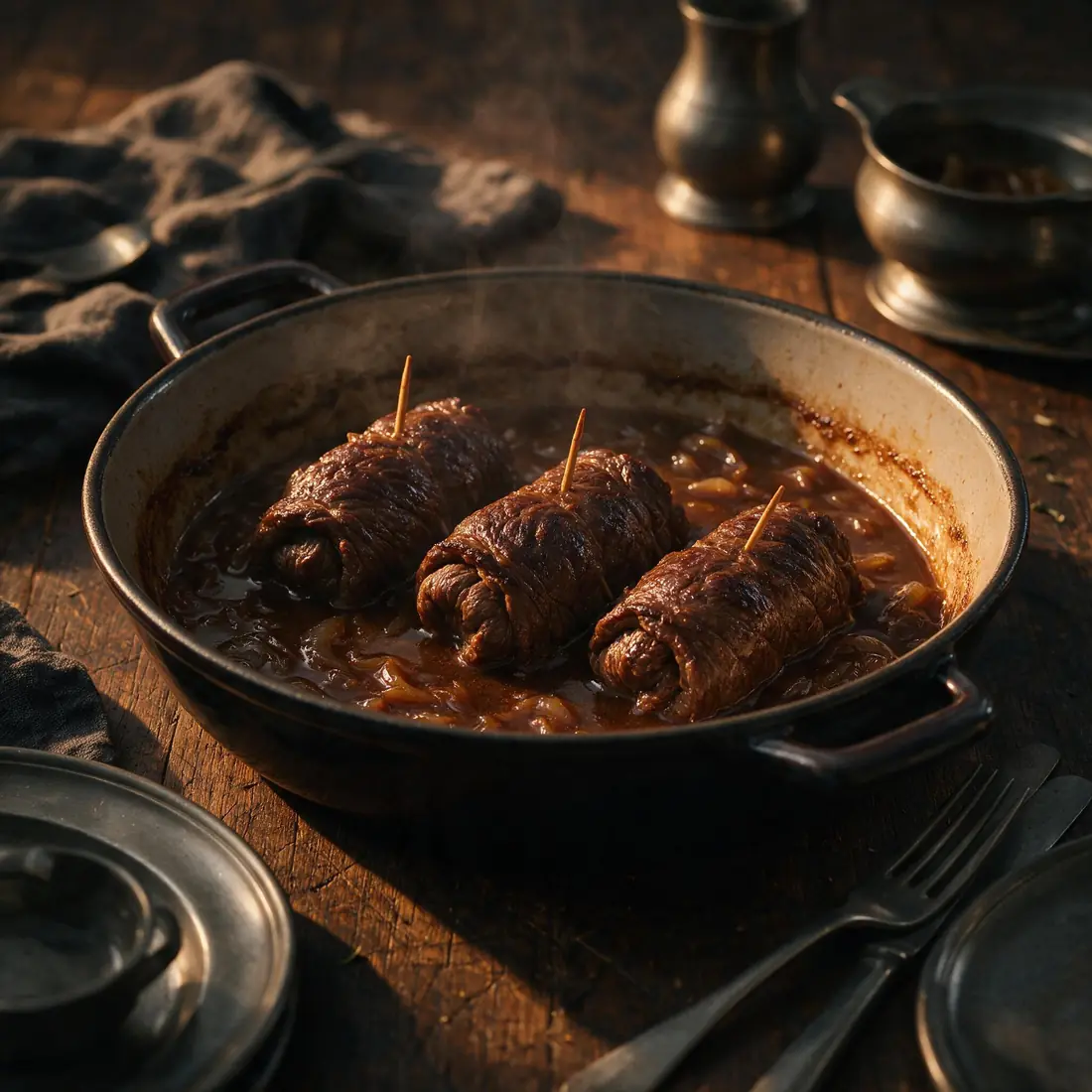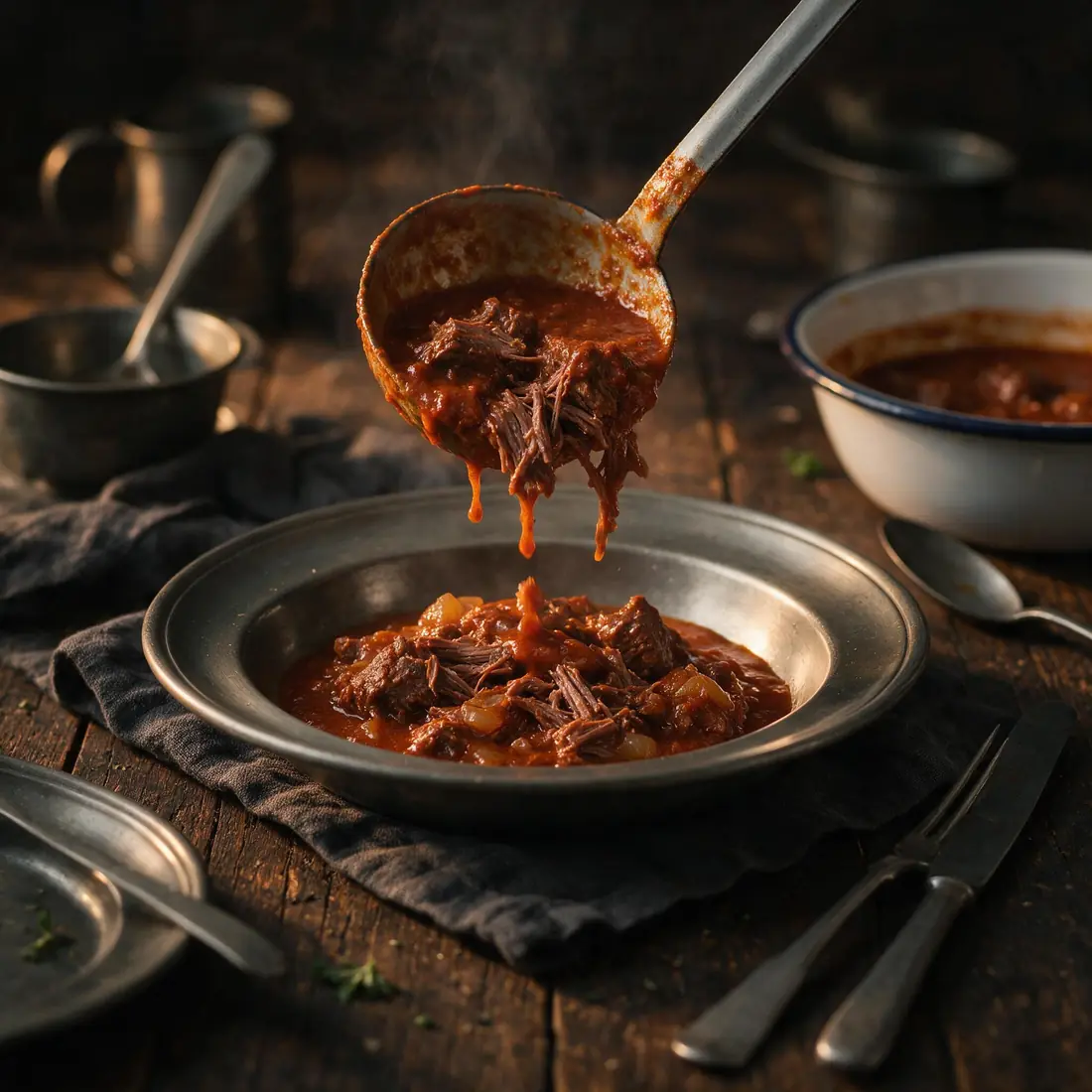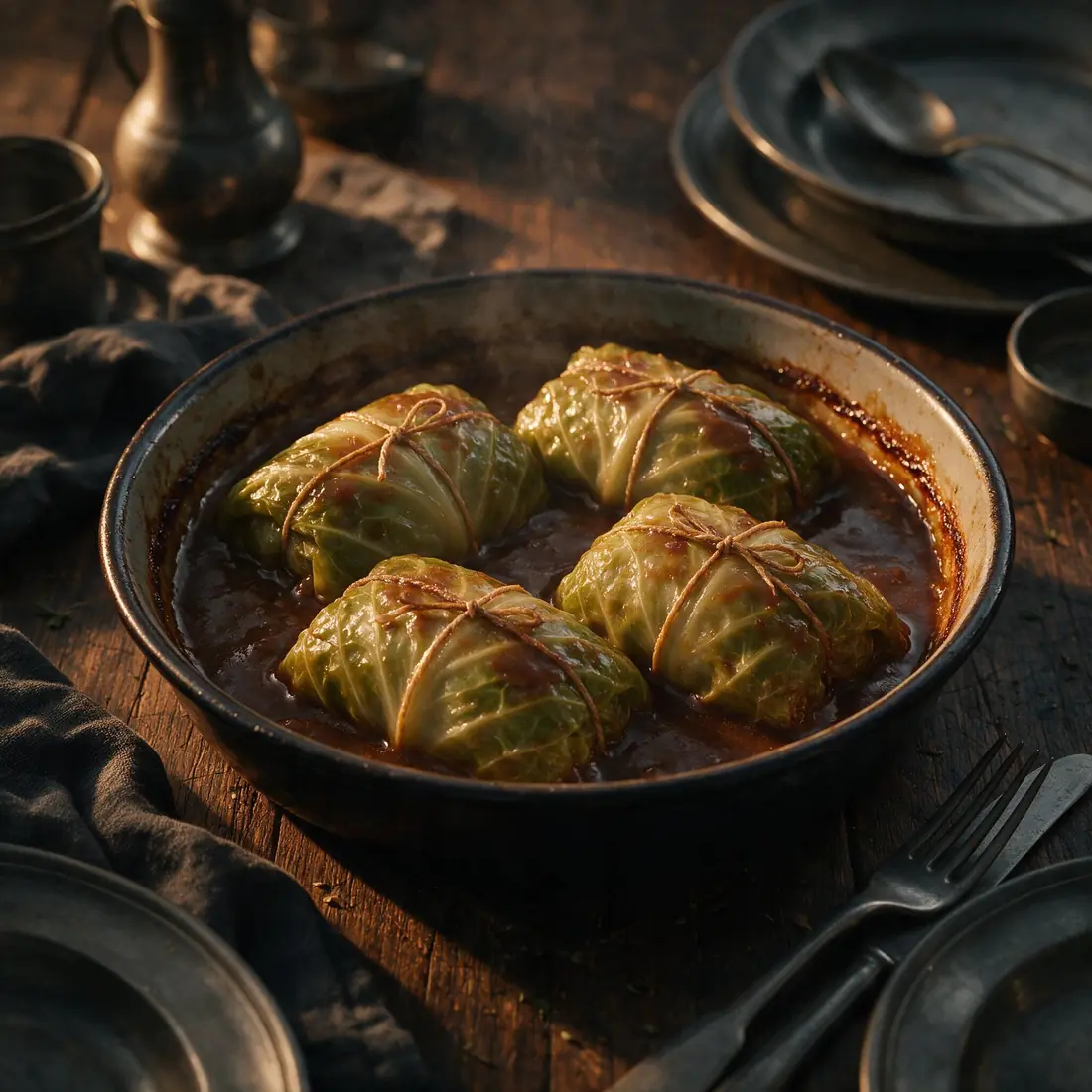

Unsere Küche (Our kitchen)

This is not a fixed menu. It is everything our kitchen knows how to make. What reaches the table depends on the party: whether we throw it or you hire us, how many people sit down, and how far away the fire is.

What follows are old recipes, the kind passed from mouth to mouth before anyone wrote them down.

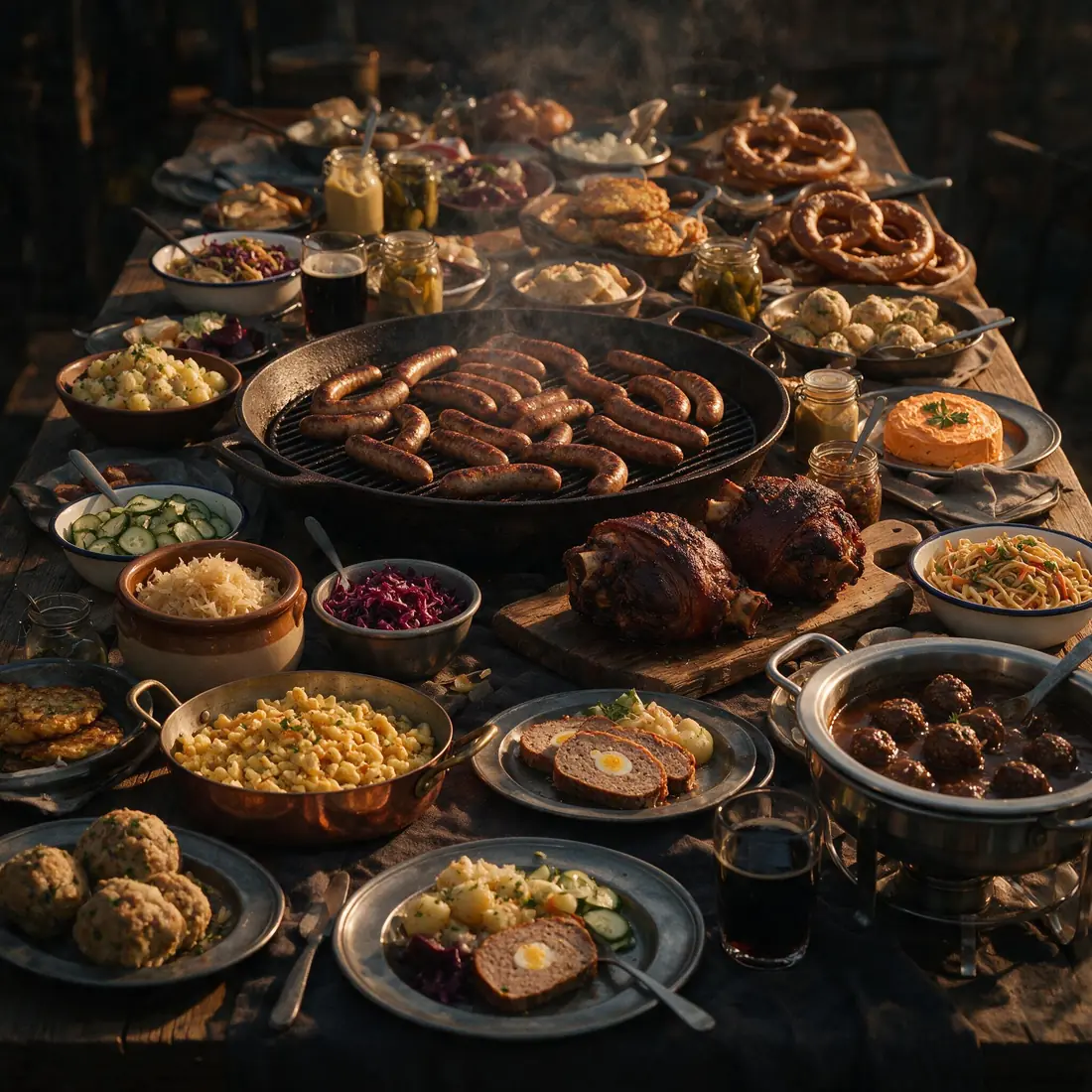
Long wooden table full of food: grill with sausages, pork knuckles, cold salads, Sauerkraut, Brezeln and meatballs in sauce

Kalte Vorspeisen (Cold starters)

These are made at night, when the house has gone to sleep and a single candle is left burning in the kitchen. They are cut, salted and carried down to the cellar.

Nobody watches over them. They work alone in the dark, and by daybreak they taste better than when they were left.

Southern potato salad, with broth and vinegar

Kartoffelsalat süddeutsch (Southern potato salad, with broth and vinegar)

The potatoes are boiled skin and all, peeled scalding hot and sliced thin while they burn the fingers. The warm potato drinks, the cold potato drinks nothing.

Over it goes hot broth with vinegar and a spoonful of mustard, and onion chopped very fine. It is not stirred, it is rocked. It is eaten warm, and the one who waits loses.

Northern potato salad, with mayonnaise

Kartoffelsalat norddeutsch (Northern potato salad, with mayonnaise)

Here everything goes the other way around. The potatoes are boiled, peeled and left to cool all night before anyone touches them. The next day they are cut into even cubes.

They are bound with mayonnaise and sour cream, with pickles and chopped hard-boiled egg, and the sour juice from the jar worked in. It rests one more night. You test it with a finger.

Pasta salad with mayonnaise

Nudelsalat klassisch (Pasta salad with mayonnaise)

The short pasta is boiled a moment less than it should be and cooled with water so it does not stick.

It goes with German sausage in cubes, peas, pickles and bell pepper, all bound with mayonnaise. Some of the dressing is kept aside, because the pasta swallows at night and the next day it asks for more. Big spoon.

White cabbage salad

Krautsalat weiß (White cabbage salad)

The cabbage is sliced so thin it goes transparent. Salt goes on and that is where the work starts: it is kneaded with the hands, squeezed, wrung, until it gives up its water and surrenders.

Then vinegar, oil, a little sugar and whole caraway. It rests all night in the dark. The next day it cracks between the teeth of whoever bites it.

Red cabbage salad

Krautsalat rot (Red cabbage salad)

Red cabbage stains the hands a color that takes its time leaving. It is sliced fine, salted and squeezed the same way, but this one is more stubborn and asks for more time.

It takes red wine vinegar, sugar, grated green apple and the juice of half an orange. It rests all night and by dawn the color has gone deeper. The spoon comes out purple.

Cucumber salad with dill

Gurkensalat (Cucumber salad with dill)

The cucumber is sliced almost as thin as paper. It is salted and left in the colander a while, until it weeps its water, and then squeezed with the fist.

Over it goes sour cream, a splash of vinegar and chopped dill, which here is traded for nothing. This one does not wait for the next day and does not forgive anyone who forgets it. It is made and it is eaten, and the plate leaves the hand cold.

Beet salad

Rote Bete Salat (Beet salad)

The beet is boiled whole, skin still on, until the knife goes in without force. It is peeled hot and the skin comes away on its own.

It is cut into cubes and bathed in red wine vinegar, oil, sugar and very fine onion. It rests until the next day. It goes in its own dish, apart from everything, because it stains what it touches. And it stains the hands.

German sausage salad

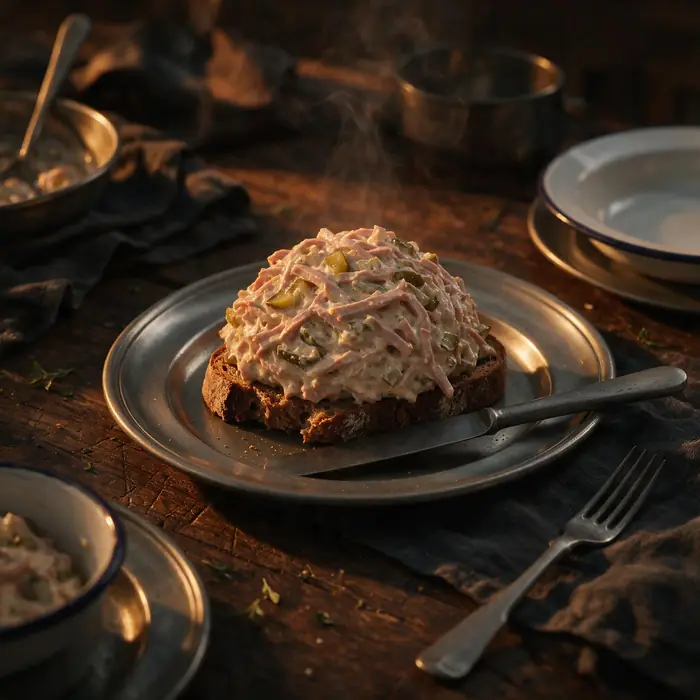
Fleischsalat (German sausage salad)

Here there is no fire and no long wait. The German sausage is cut into long thin strips, the thickness of a matchstick, and the pickles are cut just as fine.

It is bound with mayonnaise, mustard and the sour juice from the jar. It rests a while and that is it. It is eaten with bread, and fished out with the fingers when nobody is looking.

Cold starters

Aus der Pfanne (From the pan)

They say this is how cooks were tested. No sauce to cover them, no broth to hide in: nothing but meat, fire and hand.

The one who knew showed it at the first bite. The one who did not woke up looking for work in another town.

Ground meat patty

Klassische Frikadelle (Ground meat patty)

Yesterday's bread roll is soaked in milk and squeezed out by hand. The onion is softened in butter and left to cool, because hot onion ruins the mix.

Everything is brought together just barely, without kneading, with marjoram and mustard. A thumb is sunk into the middle so it does not puff up. It is turned when it lets go of the pan on its own.

German sausage patty

Bratwurst-Frikadelle (German sausage patty)

No bread goes in here, no onion. Pure pork and spice: cracked pepper, caraway, mace, a trace of ginger. The meat is ground coarse, once only, so the grain shows.

The mix is worked cold, with cold hands and the bowl over ice. In the pan the fat jumps and cracks. Whoever turns them, turns them from a distance.

Meat rolls with ajvar

Cevapcici mit Ajvar (Meat rolls with ajvar)

The garlic is grated and lost in the meat, which is ground fine, twice, with no bread and no egg to bind it. It is left covered all night so the garlic can travel.

With wet hands, rolls are shaped the thickness of a thumb. Apart, the bell peppers are burned over the fire until black, peeled and ground. It is eaten with the fingers.

Meatloaf with egg

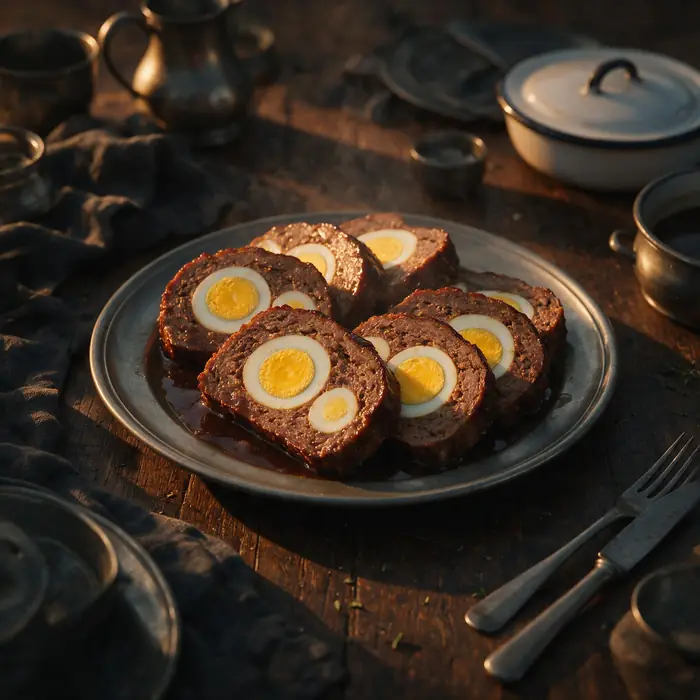
Hackbraten mit Eiern (Meatloaf with egg)

On the bottom goes the mix with soaked bread roll, softened onion and mustard. On top, lying in a row, the hard-boiled eggs already peeled. They are covered, the roll is closed and it goes into the oven until the crust browns.

It is left to rest. The knife goes in and the yellow appears, one after another. The children come closer.

From the pan

Fleischgerichte in Soße (Meats in sauce)

Four cooks fought once over which sauce was the right one. One brought capers from the cold port, another mushrooms from the mountain, another bell pepper from the garden, and the last one nothing but dark beer.

They never agreed. That is why all four are served, and the one who eats decides.

Meatballs in caper sauce

Königsberger Klopse (Meatballs in caper sauce)

In Königsberg the sea comes in cold, and that is why the sauce came out pale, like the sky over there. The balls are not fried: they are dropped into the broth and there they tremble, without it ever reaching a boil.

The sauce is opened with cream and closed with lemon. The capers go in at the very end, green and salty. Whoever tastes it first goes quiet.

Meatballs in mushroom sauce

Hackbällchen in Jägersoße (Meatballs in mushroom sauce)

The hunter comes back when the road can no longer be seen. He carries mushrooms in his pouch, dark, with the dirt still clinging.

The balls are browned in the pan until they sing. The mushrooms go into the same scorched bottom and there they let loose the whole mountain. The sauce turns black and thick. It is eaten without talking, bread in hand.

Meatballs in bell pepper sauce

Hackbällchen in Paprikasoße (Meatballs in bell pepper sauce)

The peppers are split, seeded and chopped with the onion until one cannot be told from the other. Everything softens slowly, without taking on color.

The paprika goes in last, sweet, and paints the pot red. The cream is folded in with slow turns. The red opens into pink and the spoon comes out warm.

Meatballs in dark beer sauce

Hackbällchen in Biersoße (Meatballs in dark beer sauce)

A lot of onion, cut thin, until it turns the color of honey. Then it is wetted with dark beer and the pot gives off a bitter smoke.

A little sweetness to tame it, only a little. The sauce thickens on its own, dark, and the balls sink into it. Whoever serves scrapes the bottom of the pot with the spoon.

Meats in sauce

Große Stücke (Big cuts)

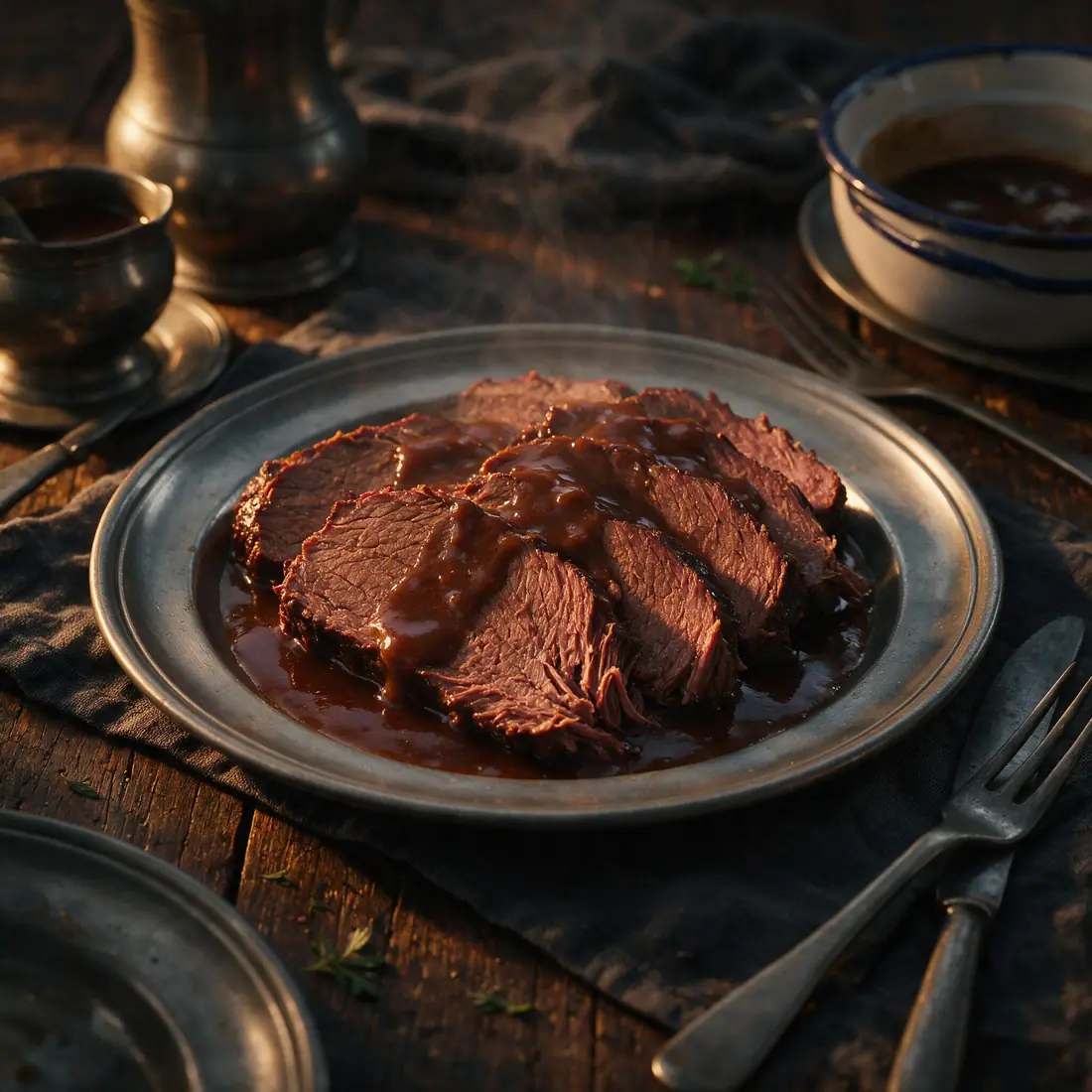
These pieces do not fit on a plate or in an afternoon. The oven is lit while it is still dark and there it stays, working alone.

By midday the whole house smells and nobody asks anymore what there is to eat. They know, and they wait.

Pork knuckle

Schweinshaxe (Pork knuckle)

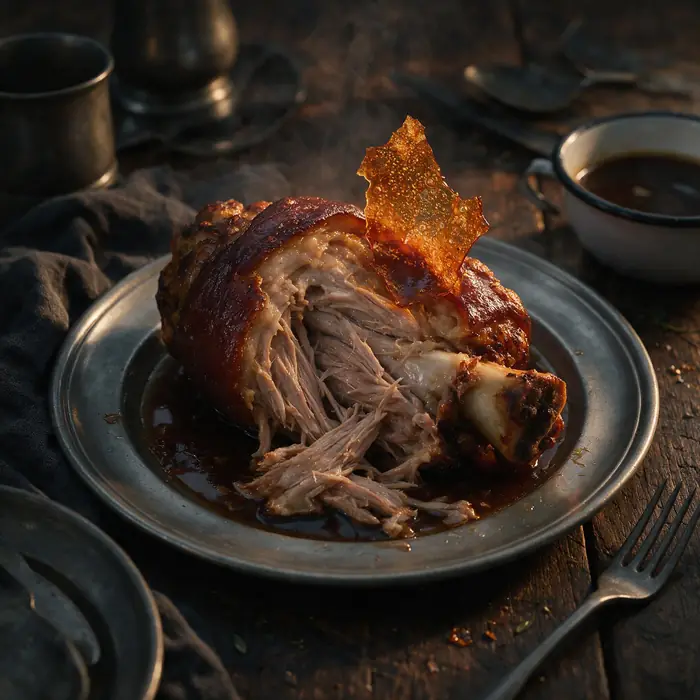
The skin is scored with the knife, coarse salt goes on, and it is left out in the night air until morning. The next day it simmers slowly, without hurry, until the meat lets go of the bone on its own.

Then it goes to the oven with dark beer, and at the end high fire until the skin cracks. The meat is sliced, the skin is broken with the hands.

Cured pork shank

Eisbein (Cured pork shank)

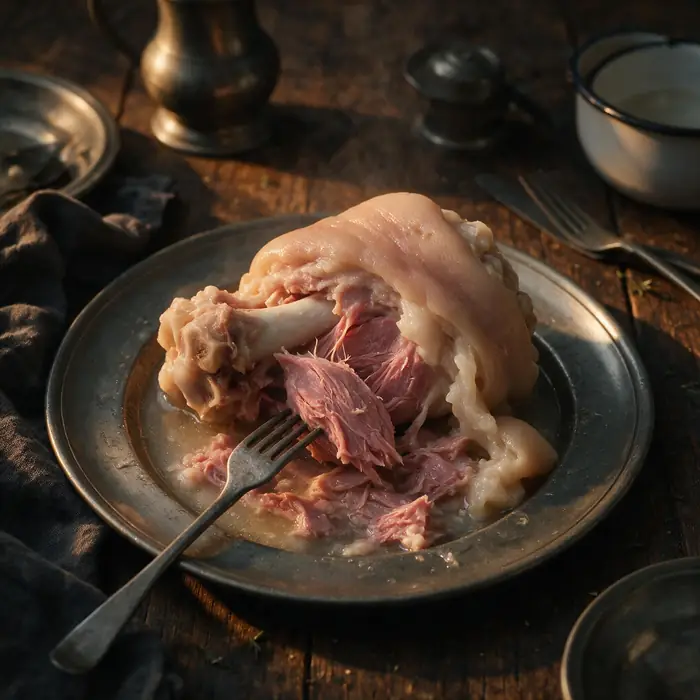
It lies down in salt water, with bay leaf and clove, and there it stays for whole days, no fire underneath. The meat turns pink to the bone and the skin loosens.

Then it cooks gently in clean water, no oven and no high fire. The skin gives soft under the knife, the meat comes away quietly, and at the table nobody hears a thing.

Vom Grill (From the fire)

Here there is no need to call anyone. The fire is lit, the first drop of fat falls, and the smoke goes out on its own to look for people.

Soon the ones from across the street show up saying they were just passing by. Nobody believes them. Nobody cares.

Thick pork sausage

Bratwurst (Thick pork sausage)

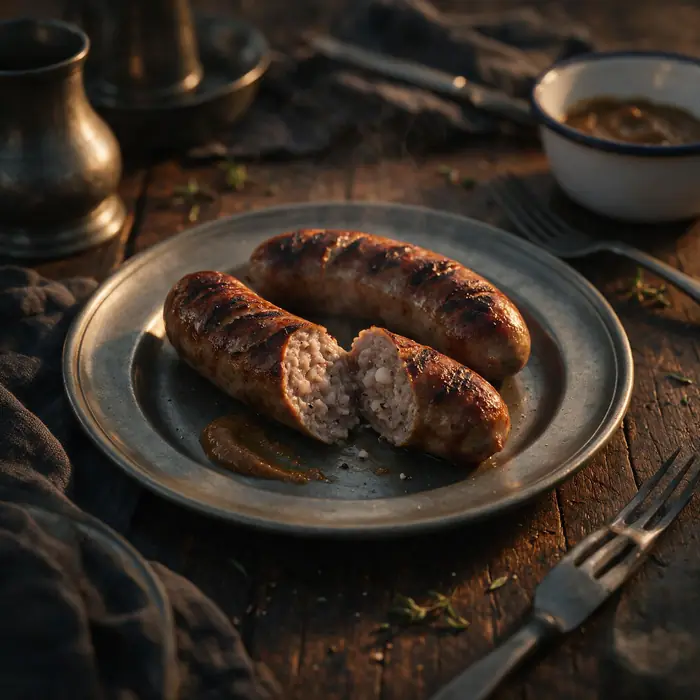
The pork is ground coarse, with marjoram and caraway, and nothing more is asked of it. It goes whole onto the coals, never pricked, so the juice does not leave through the hole.

The fire raises blisters on it and the smoke paints it dark. You can hear the fat crack as it falls. Whoever cuts it down the middle sees the grain of the meat.

Sausage with curry sauce

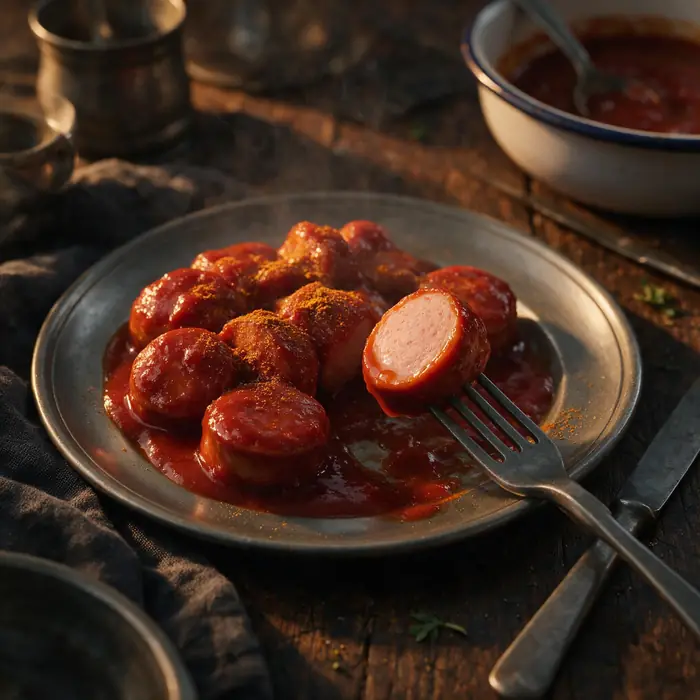
Currywurst (Sausage with curry sauce)

This story is new. It was born in Berlin among the rubble, when a woman traded liquor for a jar of yellow powder and put sauce on a sausage.

It is browned, cut into coins, and the red tomato with curry is poured over it. On top, the powder. It is eaten standing up, on a paper tray, with a small wooden fork.

Vienna sausage

Bockwurst / Wiener (Vienna sausage)

This is the gentle sausage, the one that never picked a fight. The meat is ground fine until it is smooth, no grain at all, and it has never known the coals.

It goes into hot water that steams but does not boil, because a boil bursts them and they come out sad. They come out shining. At the bite, the skin cracks softly and the child laughs.

Chicken thigh in strips

Hähnchen-Döner (Chicken thigh in strips)

The thigh is cut into strips and sleeps in yogurt with garlic, paprika and a pinch of cinnamon. The next day it is piled onto the burning griddle and not moved, until one side browns.

It is sliced into thin sheets. Beside it wait three sauces: the white, the red, and the green one of mint. Here there are tortillas too, and the hand reaches for them.

From the fire

Sättigungsbeilagen (To fill up)

There were years when there was nothing but potato and hard bread, and on that people got up to work the fields.

Today they go beside the meat, but they do not forget where they come from. They are the ones that fill the plate, and the ones that run out first.

Fried potatoes with bacon

Bratkartoffeln (Fried potatoes with bacon)

The potatoes are boiled the day before and left to cool in the night air, so they firm up and do not fall apart. The next day they are peeled and sliced thick.

They go into hot lard with onion and bacon, and there they stay still until they grow a crust. Whoever moves them too much is left without a golden edge.

Scraped noodles with cheese

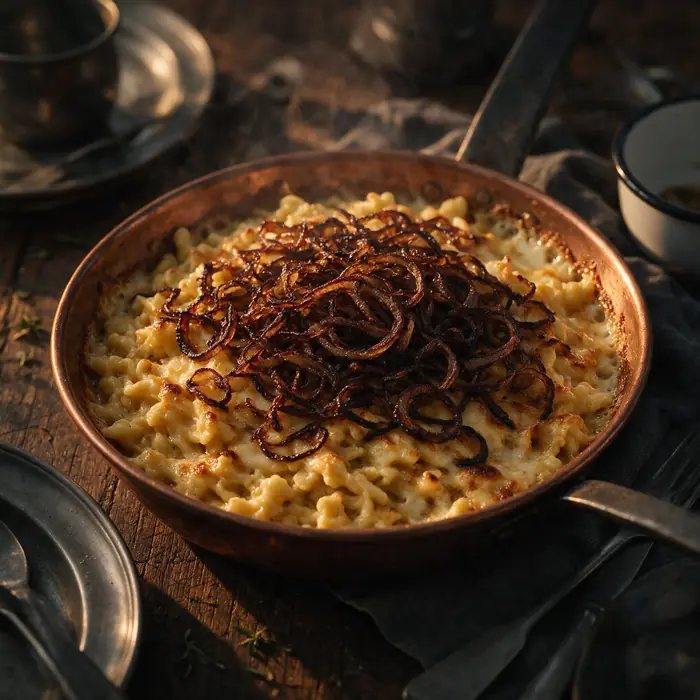
Käsespätzle (Scraped noodles with cheese)

The dough is spread on the wet board and scraped with the edge of the knife, strip by strip, into the boiling water. Each strip rises on its own when it is ready.

It is laid down in layers with cheese, layer on layer, and the fried onion is buried on top. It is served while the cheese still stretches. The spoon comes out with strings hanging.

French fries

Pommes Frites (French fries)

The potato is cut into thick strips, the kind you can feel in the hand. First they pass through warm fat, no noise, just so they soften inside. They are left to rest and lose their steam.

Then they go back to high fire and there they crack. Salt goes on the moment they come out, burning. They are eaten standing up, with the fingers.

Potato pancakes with apple puree

Kartoffelpuffer + Apfelmus (Potato pancakes with apple puree)

The potato is grated raw and wrung out in a cloth until it gives up all its water. That is how it comes out like lace in the pan, with thin edges that break.

Beside it goes the apple puree, cold. The salty and the sweet look for each other in the same bite. The children edge toward the fire before the first one cools.

Bread dumplings

Semmelknödel (Bread dumplings)

Nobody threw bread away. Yesterday's was kept, cut into cubes and softened with hot milk until the hardness left it.

It is brought together with the hands and rolled into balls between the palms. They go into water that barely trembles, never at a rolling boil, and they rise when they are ready. They are opened with two forks.

Mashed potatoes

Kartoffelpüree (Mashed potatoes)

The potatoes are boiled in their skins and peeled hot, bearing the steam between the fingers. They are mashed with the press, by hand, and never with a machine.

Butter and good hot milk go in little by little, until they are smooth and without a lump. They are tasted with the tip of the spoon. The machine turns them to paste. The hand does not.

Brotzeit (Bread and spreads)

None of this is cooked. It is gathered. The cheese that went past ripe, the fat left in the pan, the cabbage that had to be saved before the cold.

Out of throwing nothing away came what people ask for first when they sit down. Bread, a knife, and something to spread.

Whipped cheese with paprika

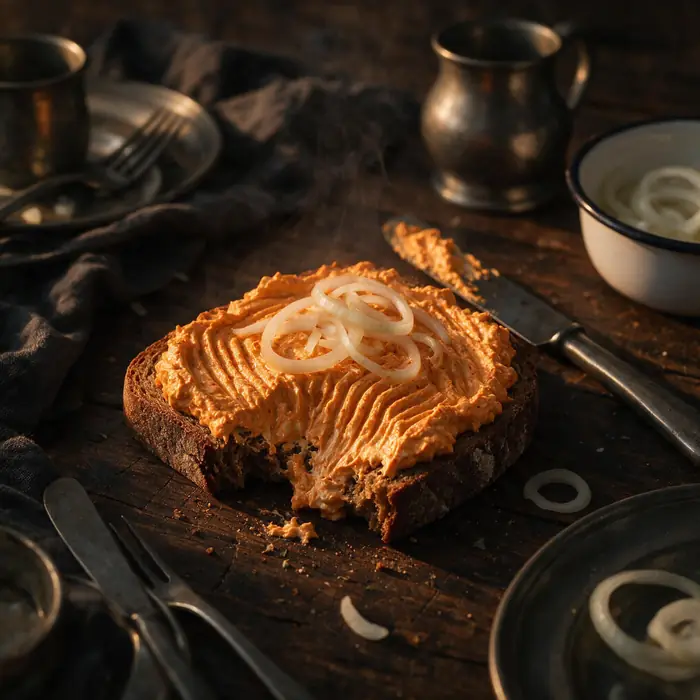
Obatzda (Whipped cheese with paprika)

The cheese nobody wanted anymore, the one that went past ripe, is mashed with butter and nothing is thrown away. Paprika goes in until it takes on the color of brick, and onion in thin rings.

It is left to rest so everything comes together and becomes one. It is spread thick on bread, with the thumb if there is no knife.

Lard with cracklings

Griebenschmalz (Lard with cracklings)

The pork fat is melted slowly until the little pieces let go and turn toasted. Apple and onion go in and brown right there, in their own.

It is poured into the jar and there it sets, white and still. Poor people's food, and the good kind. It is spread on dark bread and cracks between the teeth.

Fresh cheese with herbs

Kräuterquark (Fresh cheese with herbs)

The fresh cheese is drained in a hanging cloth until it is thick and cold. Herbs from the garden are chopped into it, chives and parsley, and it is turned with salt until it is even.

At a table where everything is fat and salt, this one arrives cold and cuts through. The spoon is lifted slowly, and the tongue rests a while.

Sour cabbage

Sauerkraut (Sour cabbage)

The cabbage is sliced fine, salted and pressed with the hand until it gives up its own water. It is covered and forgotten in the dark, whole weeks, while it works alone and turns sour.

Then it is warmed with juniper and bay leaf. The steam smells like an old cellar, and nobody in the house is uneasy about it.

Pickled cucumbers

Gewürzgurken (Pickled cucumbers)

The cucumbers are cut small and hard, before the cold of the year can reach them. They are packed standing inside the jar, tight, with dill and mustard seed.

The hot vinegar falls over them and the lid is closed. There they stay still all winter. They are bitten, they crack, and the hands are left smelling of dill.

Mustard

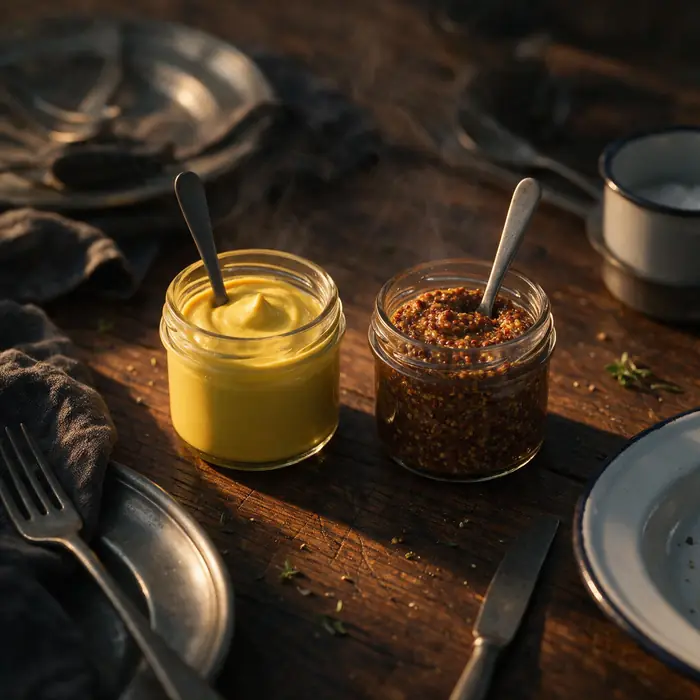
Senf (Mustard)

There are two and they never got along. The one from Düsseldorf is fierce, ground until it is smooth, goes straight up the nose and pulls tears from anyone who did not know it.

The Bavarian one is sweet and thick, dark, with the seed whole and honey in between. Everyone defends their own at the table, and the fight never quite ends.

Salted pretzel

Brezeln (Salted pretzel)

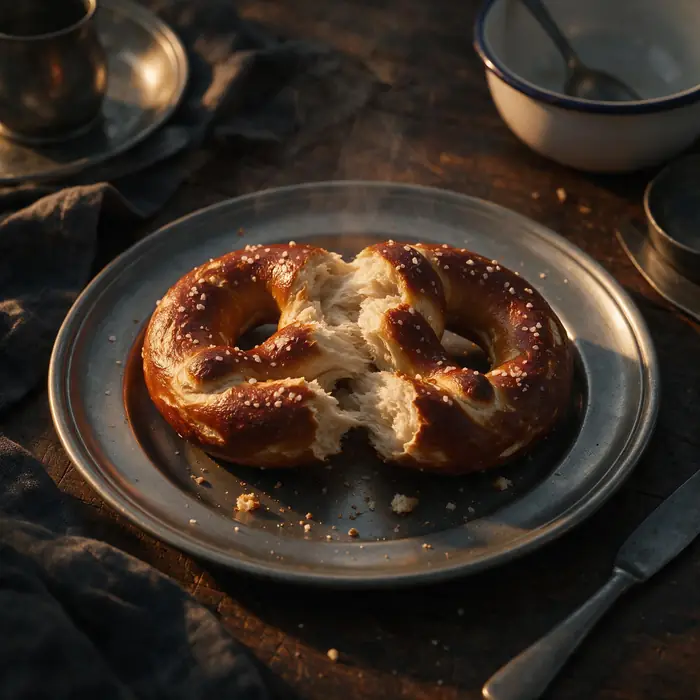
The dough is rolled into a long rope, the ends are crossed and folded over the belly, like the arms of someone praying. From that comes the knot, and from that comes the name.

It passes through the lye, which leaves its skin dark and glossy, and coarse salt is scattered over it. It comes out of the oven cracking and is broken with the hands.

Lye sticks and lye rolls

Laugenstangen & Laugenbrötchen (Lye sticks and lye rolls)

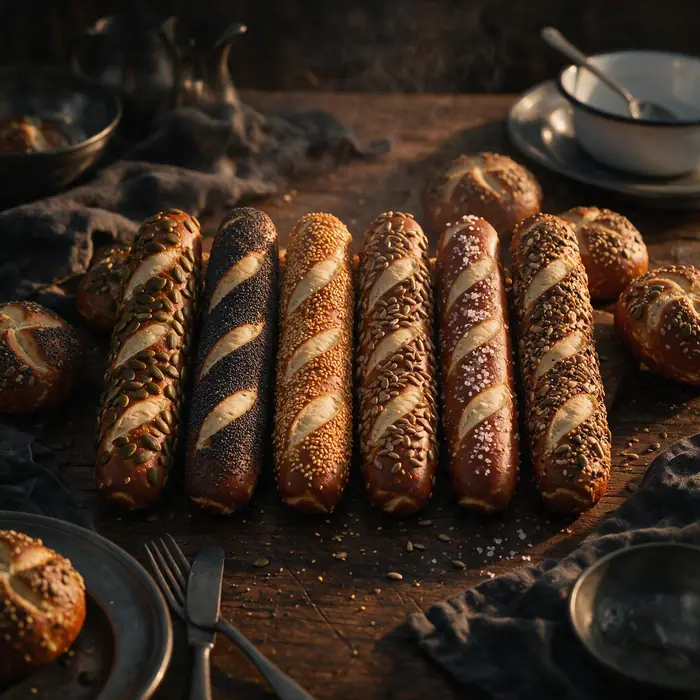
They come out of the oven lined up in a row, and not one looks like the one beside it. One comes rolled in pumpkin seed, another in poppy, another in sesame, another in sunflower seed, another with nothing but coarse salt, and the last with everything mixed together.

Everyone learns to spot their own from far away. The hand reaches out and nobody asks, and someone always complains they got beaten to it.

Farmhouse bread

Bauernbrot (Farmhouse bread)

From every dough a fistful is set aside and kept for the next one. That piece has passed from house to house, and nobody remembers anymore what year it comes from or in which kitchen it began.

The loaf comes out big and dark, with a thick crust and a tight crumb. When a daughter married, what she was handed was not the bread: it was the fistful of dough, wrapped in a cloth.

Lye sticks baked over with cheese

Käse-Laugenstangen (Lye sticks baked over with cheese)

Grated cheese and little bits of bacon are scattered over the top, and in they go to the oven. The cheese melts, runs down the sides and toasts into golden lace over the dark crust.

They come out burning hot and whole, no knife to open them. Whoever rushes burns their mouth, and even so they don't let go or wait for it to cool.