
BreakfastCold plateBreadSourdoughFlour & grain
Roggenbrotrye bread
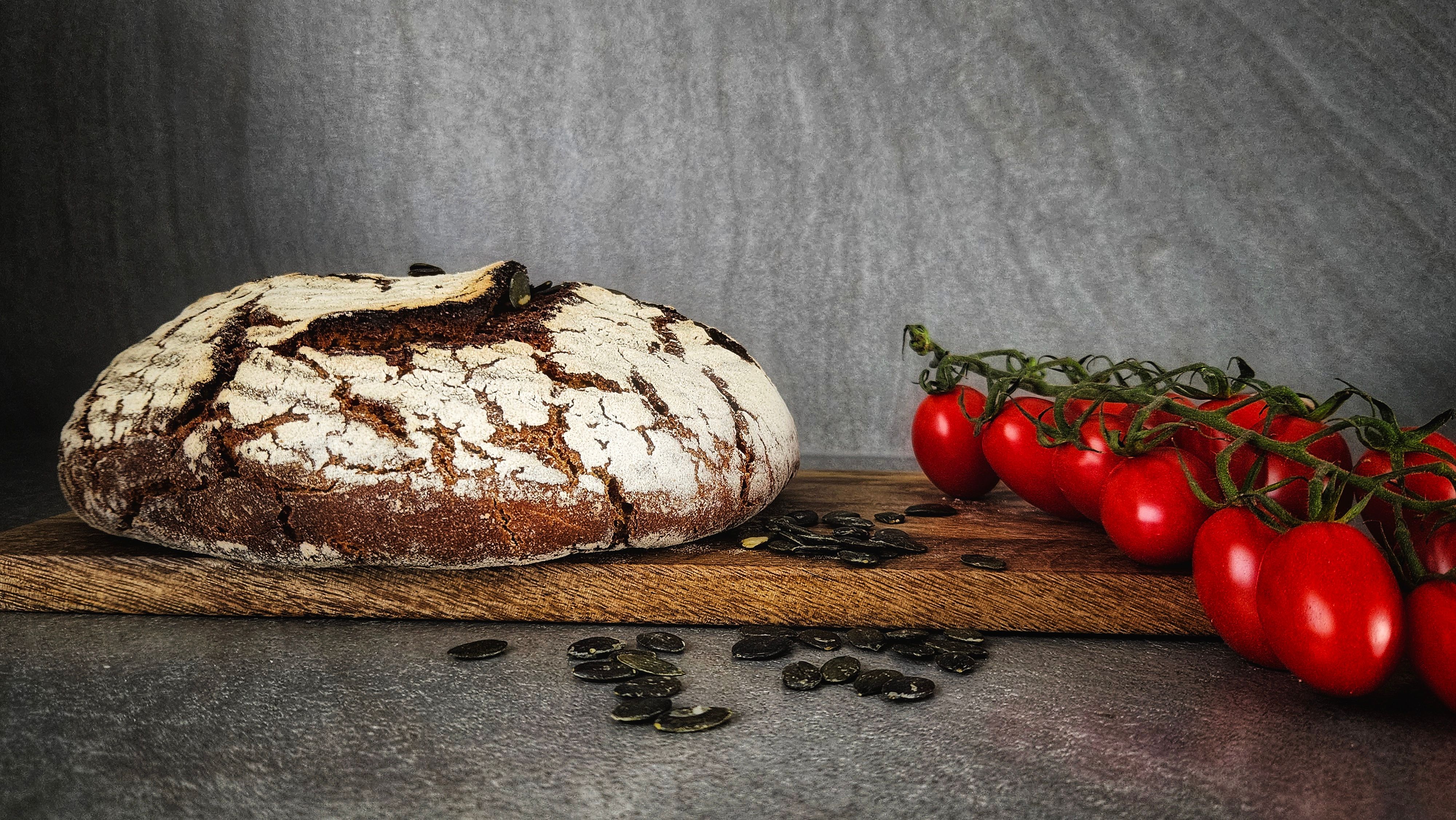
Bread made from more than 90% rye flour. With no wheat at all it reaches a German table less often than Roggenmischbrot, the mixed loaf that runs above 50% rye, the country's best-selling bread.
Zutatenwhat goes in
Rye flours of several types, water, salt and sourdough. Often a little yeast as well, doing nothing but helping it rise.
The sourdough is not one ingredient among many: without it the dough can barely be baked at all.
Herstellunghow it is made
Rye builds none of the gluten frame wheat does. Shape and crumb come instead from the starch and from the pentosans, the water-binding gums in the rye husk, and those only swell properly at a low pH.
Then there is alpha-amylase. Rye flour carries far more of this starch-eating enzyme than wheat, and rye starch gelatinises at a lower temperature, exactly where the enzyme works hardest. Left alone it breaks the freshly set starch straight back down: the crumb goes sticky, sometimes hollow, and the loaf spreads out in the oven.
The lactic and acetic acid from the sourdough drop the pH far below the enzyme's optimum and slow it right down. With rye, sourdough is not a matter of taste but of engineering.
Geschmacktaste
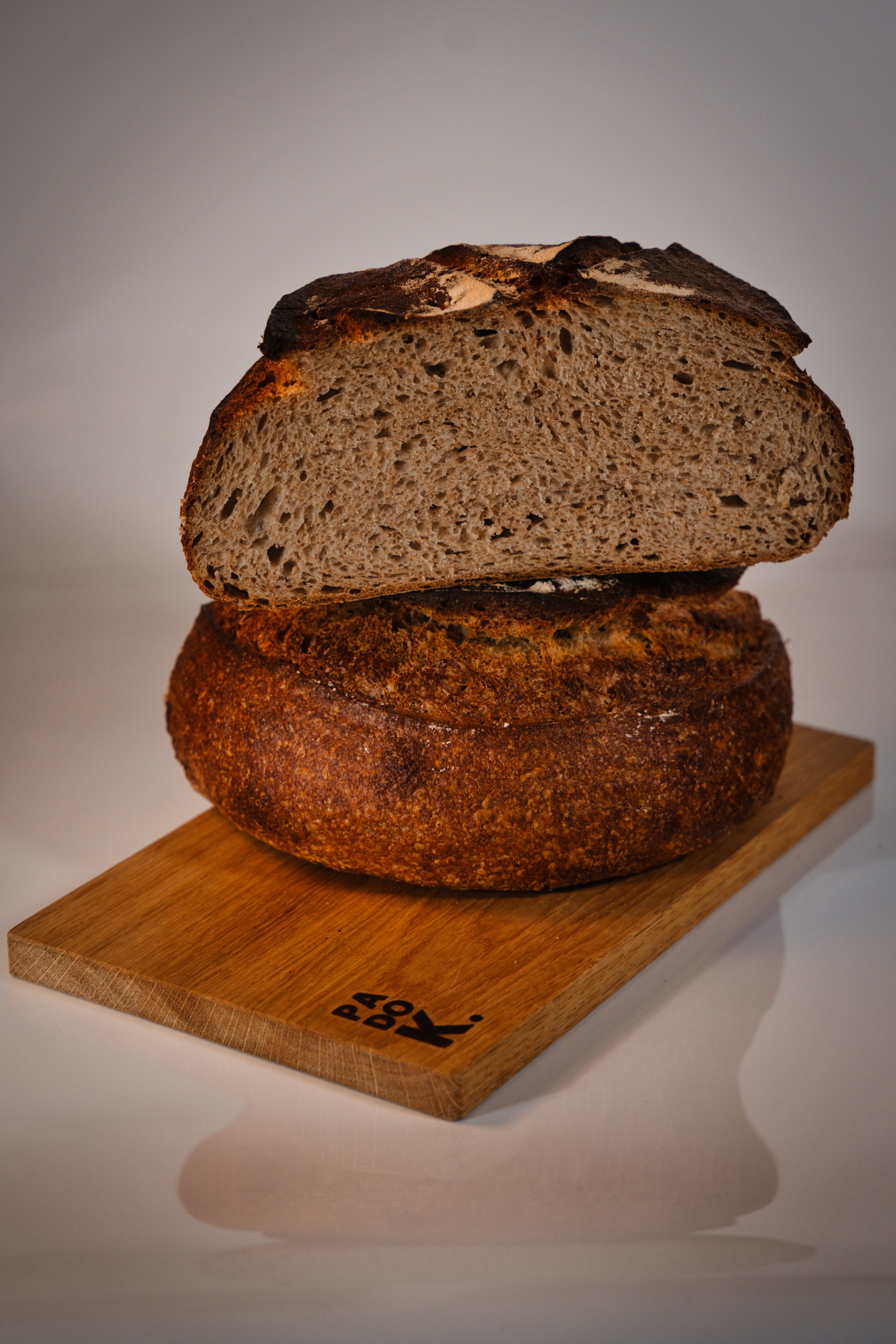
Strong, spiced, hearty and sour, with malty, earthy notes. Dense, compact, fairly damp crumb under a thick crisp crust.
The kind of sourness can be steered: lactic acid tastes mild and yoghurty, acetic acid sharper and more biting. Dough handling, temperature and proving time decide the balance.
Regionwhere it comes from
Northern and eastern Germany above all, and anywhere the soil is thin: rye still grows on lean, sandy land where wheat gives up.
Am Frühstückstischat breakfast
Cut in thick slices, with butter, cold cuts, cheese or jam. It counts as filling and down to earth.
The organic acids from the sourdough keep it fresh longer than a yeast bread and make it harder for mould to take hold.